Soil as an Asset: Resilience, Microbiome, and Carbon Farming in the Agriculture of the Future
6 MIN READ
By Luca Brenna — August 27, 2026
In recent years, the debate on agricultural sustainability has increasingly focused on soil health.
This is not merely an environmental issue: the biological quality of soil is now recognized as one of the key factors influencing productivity, climate resilience, crop quality and carbon sequestration capacity.
The topic has become increasingly relevant in a time marked by climate change, an increasing frequency of extreme weather events and the progressive degradation of agricultural resources. A perspective increasingly shared within the scientific community is emerging as a result: soil is no longer seen as simply a physical support for crops, but as a biological asset to be preserved and regenerated.
Soil degradation: a systemic challenge
Erosion, compaction, salinisation, desertification and loss of organic matter are among the most widespread forms of agricultural soil degradation: phenomena that are often observed as the end result of a more complex process progressively affecting the physical, chemical and biological components of the soil.
Among the factors most closely associated with declining soil functionality are the reduction of stable organic matter, the impoverishment of microbial biodiversity and increasing climate-related stress. The result is a gradual loss of resilience: soil becomes less efficient at retaining water, less able to make nutrients available, and more vulnerable to biological imbalances.
This is what is known as “soil fatigue”: a decline in the soil’s capacity to sustain abundant, high-quality yields over time without an ever-growing reliance on external inputs.
Organic matter as a health indicator
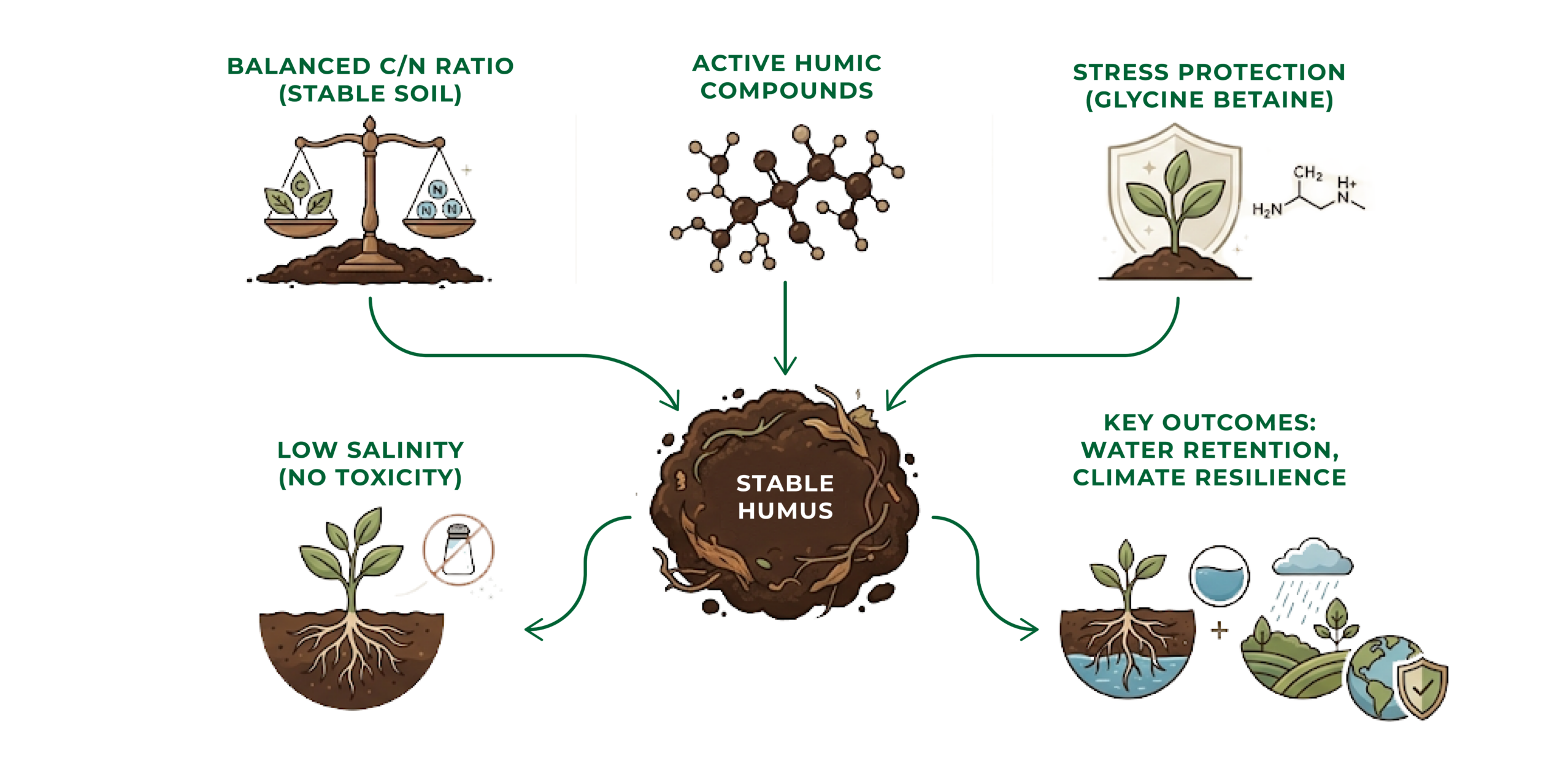
Organic matter is one of the most important indicators of agricultural soil quality. Beyond serving as a nutrient reserve, it plays an essential role in soil structure formation, water retention capacity and carbon stabilization.
The humified fractions of organic matter, such as humic and fulvic acids, are of particular scientific interest because they contribute to long-term fertility. An adequate carbon-to-nitrogen ratio, along with the presence of stable organic compounds, promotes humus formation, a key factor in maintaining soil’s agronomic properties.
Furthermore, a well-structured organic matrix improves the soil’s ability to cope with drought periods and adverse climate conditions, issues that are becoming increasingly relevant across Mediterranean areas.
The organic engine and humification
The soil microbiome: agriculture’s invisible infrastructure
Alongside organic matter, research is placing growing importance on the soil microbiome: the community of bacteria, fungi, and other microorganisms that populate the root ecosystem.
This biological component performs functions essential to crop productivity. Numerous microorganisms are involved in breaking down organic matter, making nutrients such as nitrogen and phosphorus available to plants, and producing metabolites that promote plant growth.
Other microbial groups help protect plants naturally through competition, antibiosis, and the activation of physiological defenses. As a result, microbiome diversity is now regarded as one of the leading indicators of an agroecosystem’s overall health.
The loss of microbial biodiversity doesn’t just reduce biological fertility, it also limits the soil’s ability to adapt to environmental stress and disease pressure.
From fertilization to soil regeneration
The evolution of agronomic practices is gradually shifting attention away from simple nutrient supply and toward rebuilding the biological functionality of soil.
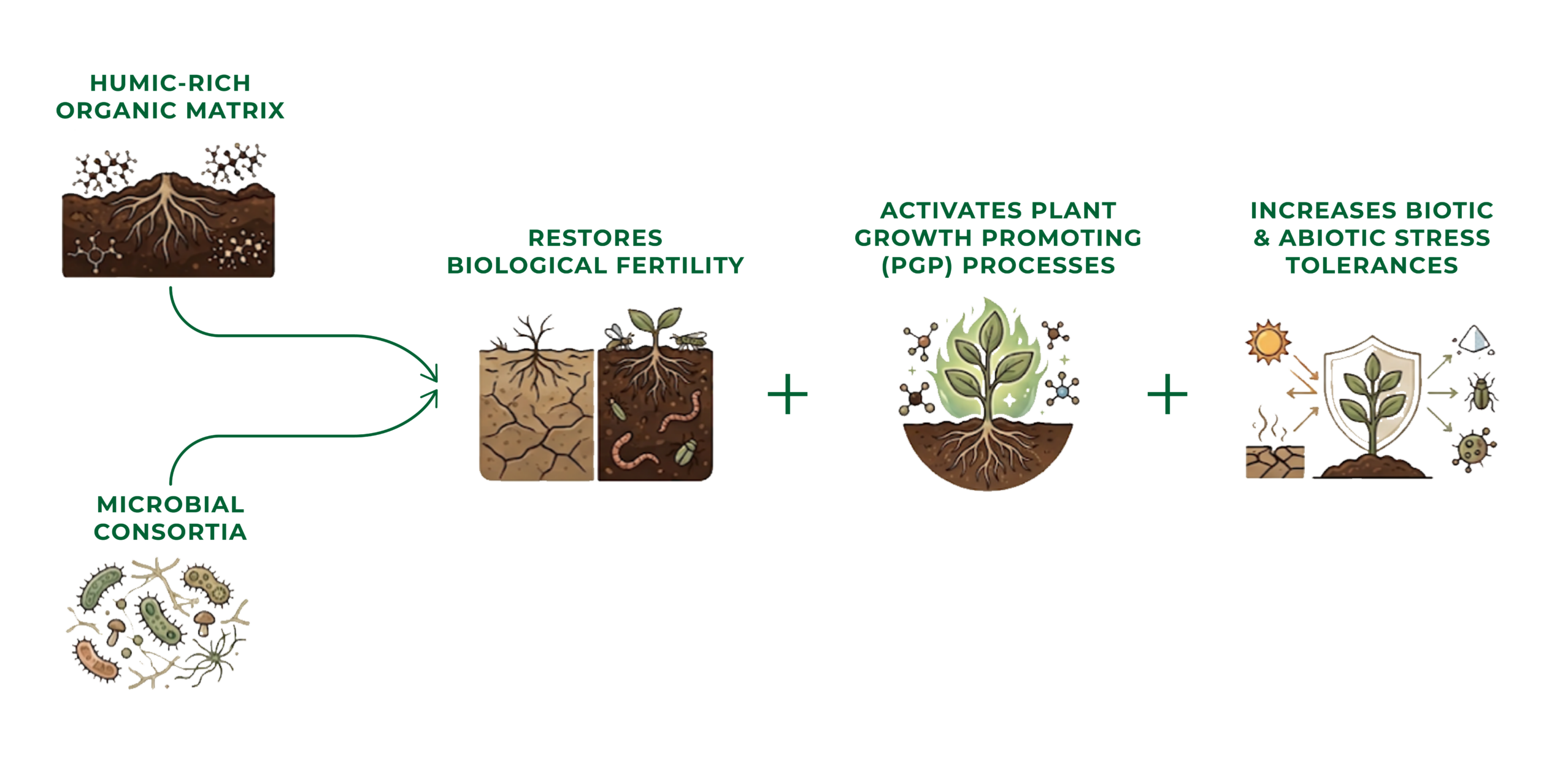
This shift has generated growing interest in biofertilizers that combine stabilized organic matter with beneficial microbial communities. The goal isn’t to fully replace conventional nutritional strategies, but to help restore the biological characteristics that make soil a resilient ecosystem.
Combining organic matrices rich in humic compounds with selected microbial consortia can help restore biological fertility and activate what are commonly known as Plant Growth Promoting (PGP) processes, while also increasing crop tolerance to both biotic and abiotic stress.
The Biofertilizer Effect: PGP & Biological Fertility
This approach reflects the principles of regenerative agriculture, which aims to simultaneously improve productivity, environmental quality, and the conservation of natural resources.
Benefits along the agri-food supply chain
The effects of improved soil health extend well beyond the field.
At the agronomic level, greater microbiome biodiversity can lead to more efficient nutrient use, better management of climate-related stress, and greater yield stability.
On the quality front, several studies point to links between soil health, biological activity, and the metabolic composition of crops, which in turn can affect the nutritional value, taste, and shelf life of food products.
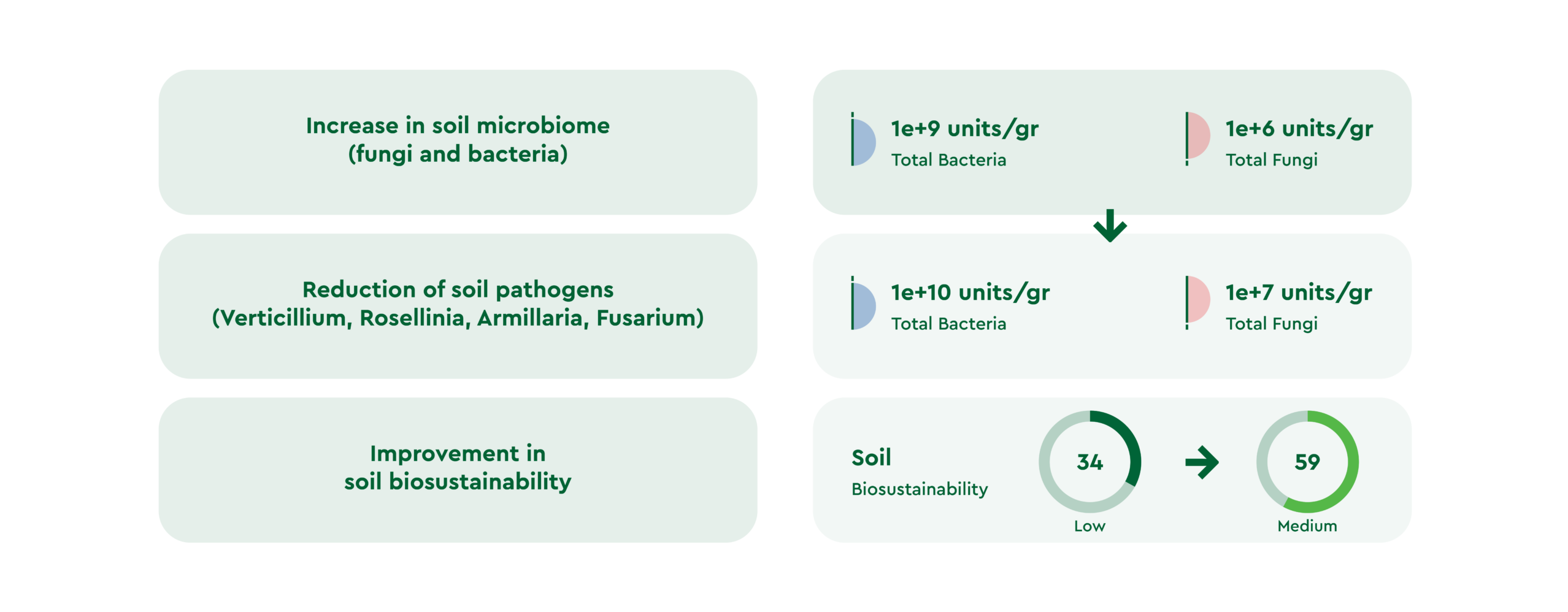
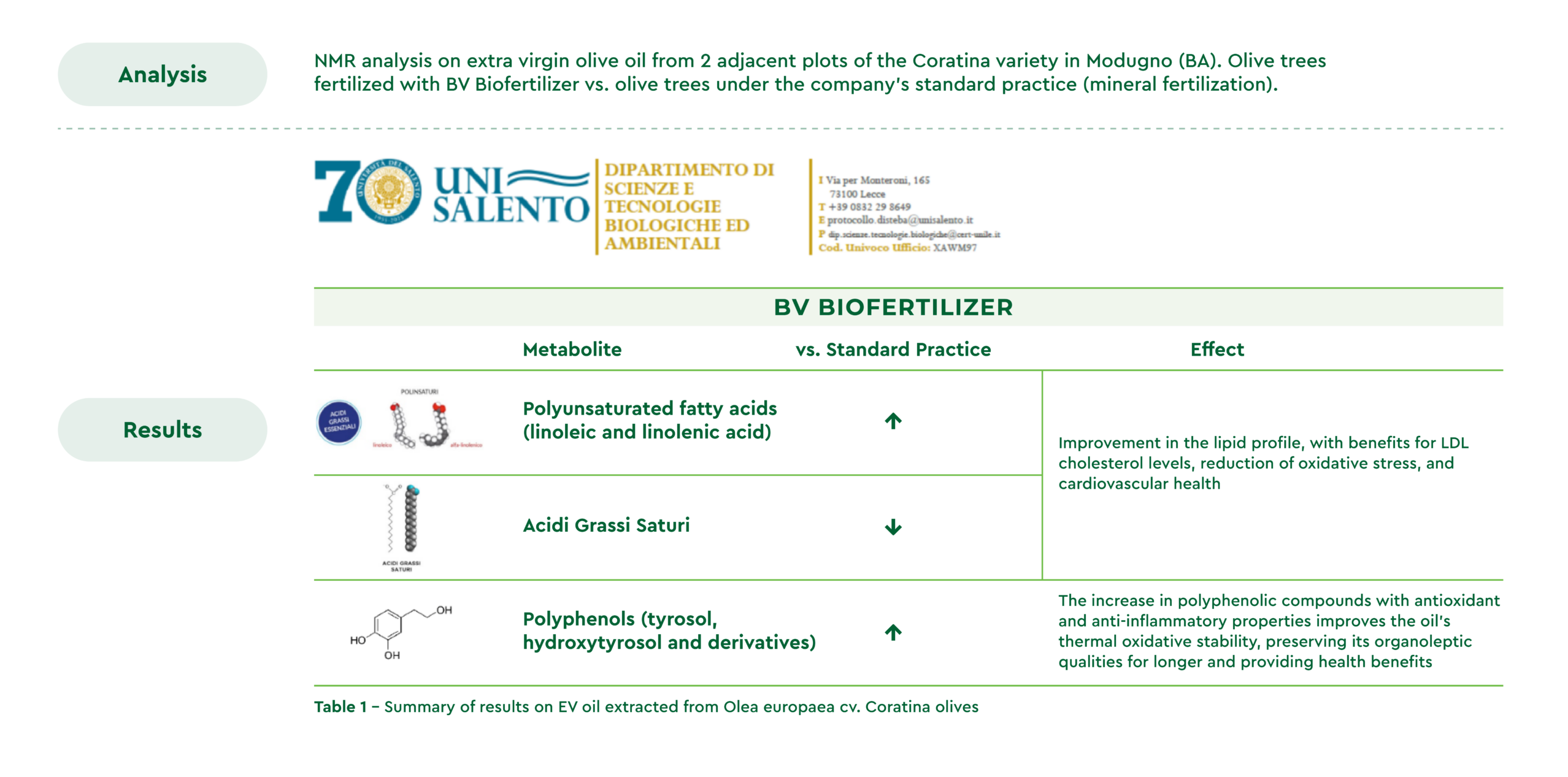
Valuable insights have come from research in olive growing. In comparative trials conducted on Coratina cultivar orchards, strategies based on biofertilizer use were associated with increased microbial biodiversity and a reduction in certain soil-borne pathogens. At the same time, analyses of the extra virgin olive oil produced showed favorable changes in polyphenol content and lipid profile, parameters that are particularly relevant to the quality of the final product.
Biofertilizer in Olive Growing – Impact on Soil Microbiome
Biofertilizer in Olive Growing – Impact on Oil Quality
These findings call for further investigation and validation on a larger scale, but they confirm the growing research interest in the link between soil health and food quality.
Carbon farming and the circular economy
Another aspect attracting growing interest is the role soil plays in climate mitigation strategies.
Increasing stable organic matter boosts carbon storage in agricultural soils, reducing atmospheric CO₂ concentrations. This principle underpins the concept of carbon farming: a set of practices aimed at promoting carbon sequestration through the sustainable management of agricultural systems.
At the same time, using agri-industrial residues and by-products to produce organic matrices is a concrete example of the circular economy applied to agriculture. Recovering waste materials makes it possible to turn low-value inputs into resources for regenerating the biological capital of soils, generating both environmental and economic benefits.
Conclusions
Growing attention to the resilience of agricultural systems is placing soil back at the center of agri-food innovation strategies. The quality of organic matter and microbial biodiversity represent two fundamental levers for countering soil degradation and improving agroecosystems’ ability to respond to climate challenges.
The Macro Impact: Carbon Farming & Circularity
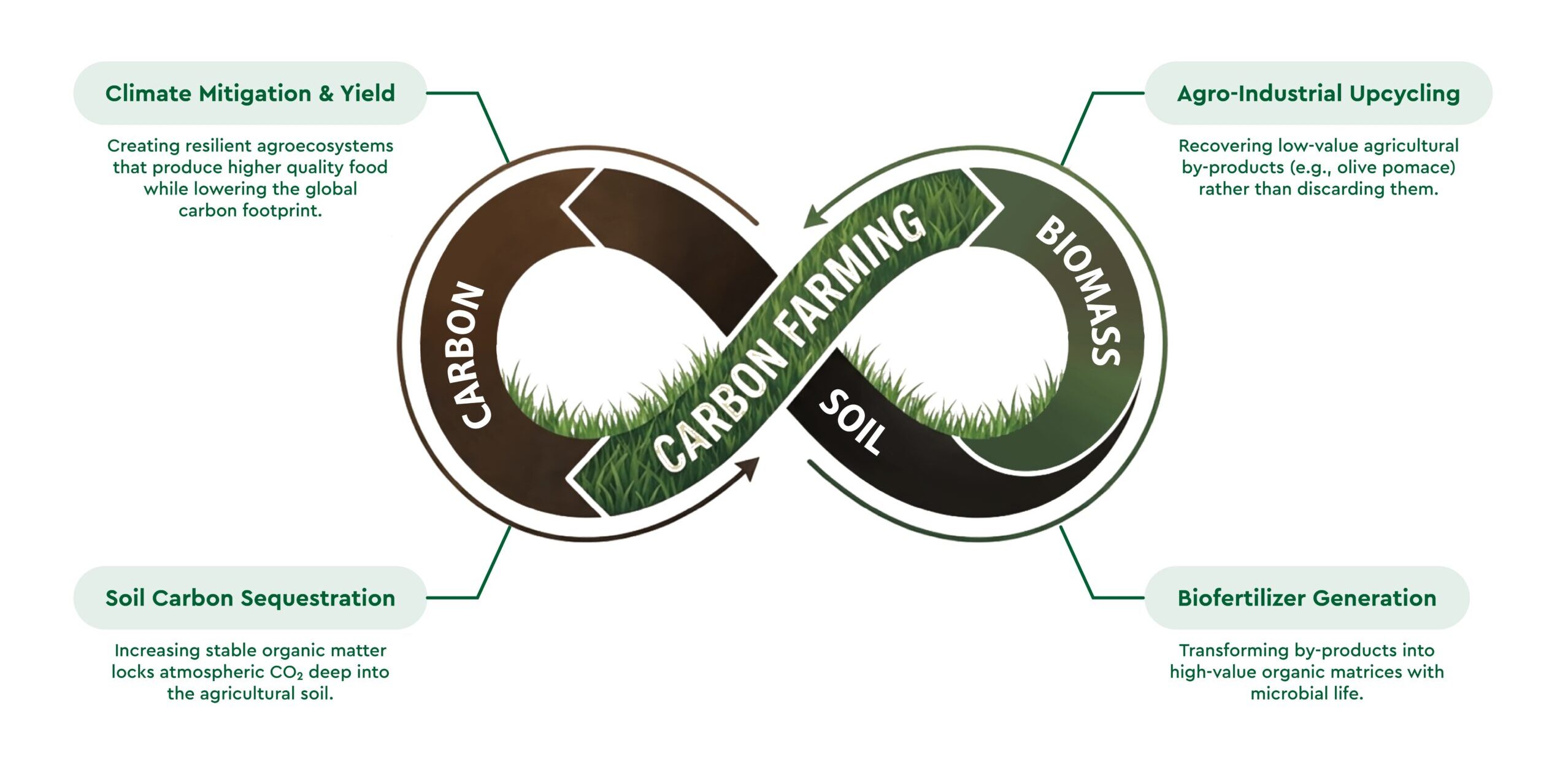
From this perspective, the concept of fertility is evolving from a primarily nutritional view to a systemic one, in which soil is understood as a complex biological infrastructure. Investing in its regeneration means both preserving agricultural productivity and promoting food quality, environmental sustainability and carbon sequestration capacity.
In other words, it means recognizing soil for what it truly is: one of the most strategically important resources for the future of agriculture.

Share on


