The Architecture of Automation: How AI Is Reshaping Food Supply Chains
By Andrea and Sara, Certified Origins
July 21, 2026
6 MIN READ
Artificial intelligence is no longer sitting at the edge of the food industry. In 2026, it is moving into the center of operations, where critical decisions about quality, traceability, inventory, and logistics occur every day.
For food businesses, this shift is less about adopting technology for its own sake and more about solving familiar problems effectively. Global supply chains remain exposed to high volatility, regulatory requirements – such as the updated traceability standards enacted in 2026 – are tightening, and customers increasingly demand proof of origin rather than simple product claims.
Used correctly, AI helps companies move faster, reduce operational waste, and strengthen market trust.
The Technical Landscape of Food-System AI
To understand how AI creates tangible value, the technology can be categorized into four primary functional disciplines transforming the modern agrifood supply chain:
- Computer Vision (CV) and Edge AI: Uses deep learning neural networks and high-speed digital cameras to visually inspect physical objects. Operating at the “edge” means the data is processed locally on the factory floor’s hardware rather than relying on a distant cloud server, enabling real-time detection without network delays.
- Analytical Machine Learning and Spectroscopy: Focuses on processing high-dimensional laboratory data. By applying classification algorithms to complex scientific outputs, machine learning models detect patterns, anomalies, and chemical variations that are invisible to traditional manual analysis.
- Predictive Analytics and Forecast Modeling: Combines historical data with real-time variables – such as point-of-sale velocity, logistics transit updates, and weather patterns – to help management teams anticipate demand, manage stock efficiently, and reduce spoilage.
- Generative AI and Agentic Assistants: Specialized software agents connected directly to Enterprise Resource Planning (ERP) databases. They allow teams to use natural language to query complex data systems, identify root causes of supply chain disruptions, and support corporate planning.
A fundamental decision: Internal Builds vs. Vendor Platforms
One of the first choices companies face is whether to develop custom systems in-house or work with an external commercial vendor platform. There is no single correct answer; the right choice depends on operational scale, internal capability, and how closely the technology needs to fit the business.
Operational Trade-offs
| INTEGRATION STRATEGY | KEY ADVANTAGES (PROS) | STRATEGIC CHALLENGES (CONS) |
|---|---|---|
| Internal Development (Custom In-House) |
|
|
| External Integration (Third-Party Vendors) |
|
|
Practical Applications: Real-World Industry Benchmarks
AI is only interesting if it improves business. That means lower waste, fewer manual errors, better planning, stronger traceability, and consistent quality. In food, these are not abstract benefits. They affect margins, customer relationships, audit readiness, and brand credibility.
Industry data from 2026 shows that technology investment is accelerating as organizations shift from small pilot programs to system-wide rollouts to combat labor constraints and inventory lag.
Industry Insight: While consumer-facing chatbots dominate public discussions, back-end operational AI tools are driving the true financial and qualitative returns for the agrifood sector.
Enterprise Retail and High-Volume Manufacturing
- Albertsons Companies: The grocery retailer utilizes an Intelligent Quality Control tool across its distribution centers. Powered by advanced computer vision, the system assists inspectors in evaluating the fresh produce supply chain, ensuring faster, objective quality scoring before food ever reaches store shelves.
- Sam’s Club: Utilizing scaled computer vision at store exits, the company uses 3D digital camera arrays and vision AI to instantly cross-reference digital shopping baskets with physical items, eliminating manual verification queues and speeding up exit times by over 20%.
- Nestlé: The global food manufacturer uses computer vision models integrated directly with automated sorting systems. The technology screens bulk raw ingredients for color deviations and foreign objects at high throughput speeds, catching raw material variations before processing.
Field-Tested Technical Examples
To provide a clear view of how these models operate on specialized, origin-protected production lines, we can look at several practical applications currently being engineered and evaluated within our own global operations:
AI-Driven NMR Data Analysis
In Certified Origins, we’re developing Nuclear Magnetic Resonance (NMR) spectroscopy technology which generates highly detailed, high-dimensional molecular maps – essentially a “molecular fingerprint” – of premium food products like extra virgin olive oil. Processing this vast amount of chemical data manually to verify geographic origin requires immense time. By applying specialized machine learning classification algorithms to these NMR datasets, systems can instantly cross-reference a sample’s molecular profile against authentic regional baselines, accelerating quality control and providing clear verification of product authenticity.
Edge-Based Line Monitoring
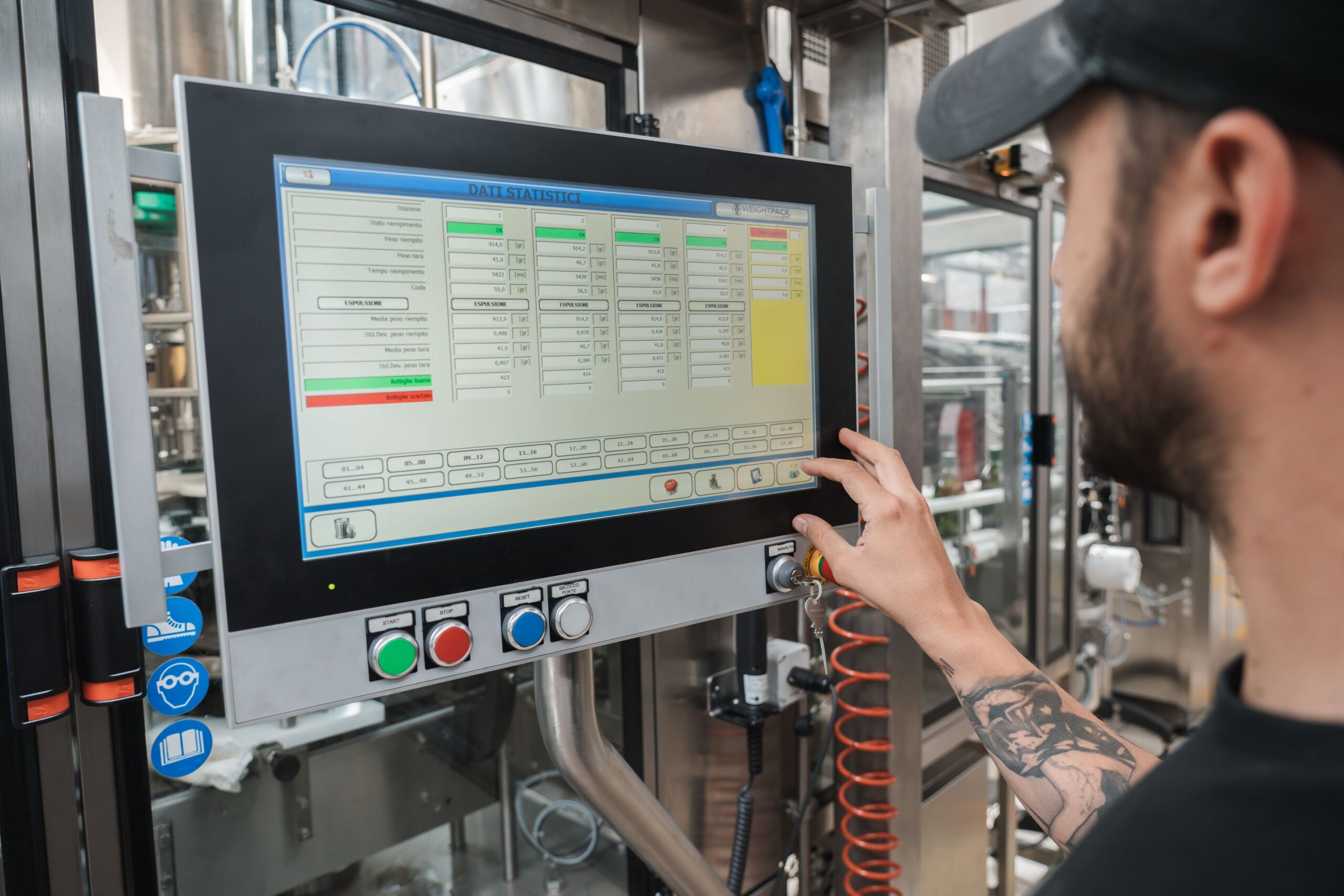
We’re also testing affordable, lightweight computer vision hardware – such as systems built on Raspberry Pi devices – for our bottling and packaging lines. Operating entirely at the edge, the system automatically monitors the filling line and tracks bottle counts in real time, providing plant managers with highly accurate throughput data without requiring expensive cloud infrastructure.
Photographic Shelf Analytics
In retail management, computer vision tools are used to conduct visual analysis of supermarket shelves. By processing photographs taken in the field, the AI helps sales representatives verify real-time stock availability, analyze product placement, and deliver precise, actionable insights directly to grocery retail buyers.

Conclusion
The food industry does not need more AI rhetoric. It needs systems that solve real problems and fit real operations. A dashboard is not enough, the technology needs to change how decisions are made.
The companies that will benefit most are those that treat AI as a core part of their operating model, rather than as a side project. In a sector where quality, compliance, and trust all matter, that is where the strongest long-term returns will come from.



Share on


